


ph222 | Exploring the World of Strategy Games: A Dive into Strategic Entertainment
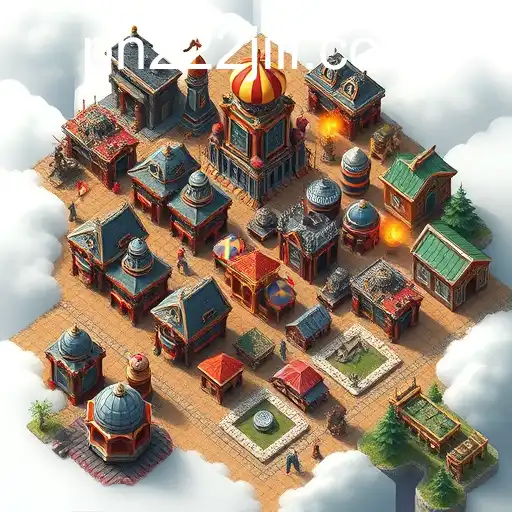
Strategy games have long held a prominent position in the realm of interactive entertainment, enticing players with their unique blend of critical thinking, tactical planning, and immersive narratives. As a game category, 'Strategy Games' invites players into worlds where every decision can lead to victory or defeat, offering a form of entertainment that is as intellectually stimulating as it is engaging.
At their core, strategy games require players to anticipate potential outcomes and devise innovative solutions to complex problems. This gameplay mechanic not only serves to entertain but also cultivates essential cognitive skills such as problem-solving, strategic planning, and adaptive thinking. Within the strategy genre, there exists a plethora of subcategories, ranging from real-time strategy (RTS) games, which demand quick thinking and rapid decision-making, to turn-based strategy (TBS) games, which allow for more thoughtful and deliberate planning.
A significant appeal of strategy games is their ability to transport players into various historical and fictional contexts. Games set in historical periods, such as the 'Total War' series, offer a rich tapestry of strategic possibilities by recreating famous battles and political scenarios. In contrast, futuristic strategy games like 'StarCraft' or 'Civilization' allow players to ponder the unknown and explore scenarios where they can expand empires beyond the stars or guide a nascent civilization through the ages.
Moreover, the strategic genre is not only about military conquests but also encompasses games focused on economic management, tactical role-play, and diplomatic negotiations. For instance, games like 'SimCity' and 'Cities: Skylines' provide players with the tools to build and manage thriving, intricate cityscapes, balancing fiscal resources with public satisfaction. Similarly, 'XCOM: Enemy Unknown' challenges players to tactically manage a squad of soldiers against alien threats, splitting attention between battlefield strategy and resource management.
The growing popularity of strategy games can partly be attributed to advancements in technology that allow for more complex simulations and more engaging gameplay experiences. This has led to an evolution in game design, where the lines between different types of strategy games are blurred, often incorporating elements from other genres to enrich the gaming experience.
An emerging trend in the strategy gaming community is the integration of multiplayer and cooperative features, enabling players to collaborate or compete with others across the globe. This social component adds another layer to the strategy gaming experience, as players must not only consider their in-game strategies but also adapt to the unpredictable strategies of other real-life players.
In conclusion, the world of strategy games continues to evolve and thrive, offering players an escape into intricate worlds where strategic acumen is rewarded and critical thinking is honed. As technology advances and game design becomes more innovative, the appeal of strategy games is set to expand even further, drawing in new generations of players eager to test their mettle in these complex, captivating virtual arenas.
